






High Purity Alumina: Solving Extreme Wear and Dielectric Failure
Discover semiconductor grade alumina components engineered for severe environments. Our high purity Al2O3 provides unmatched dielectric strength and wear resistance. Request custom DFM.
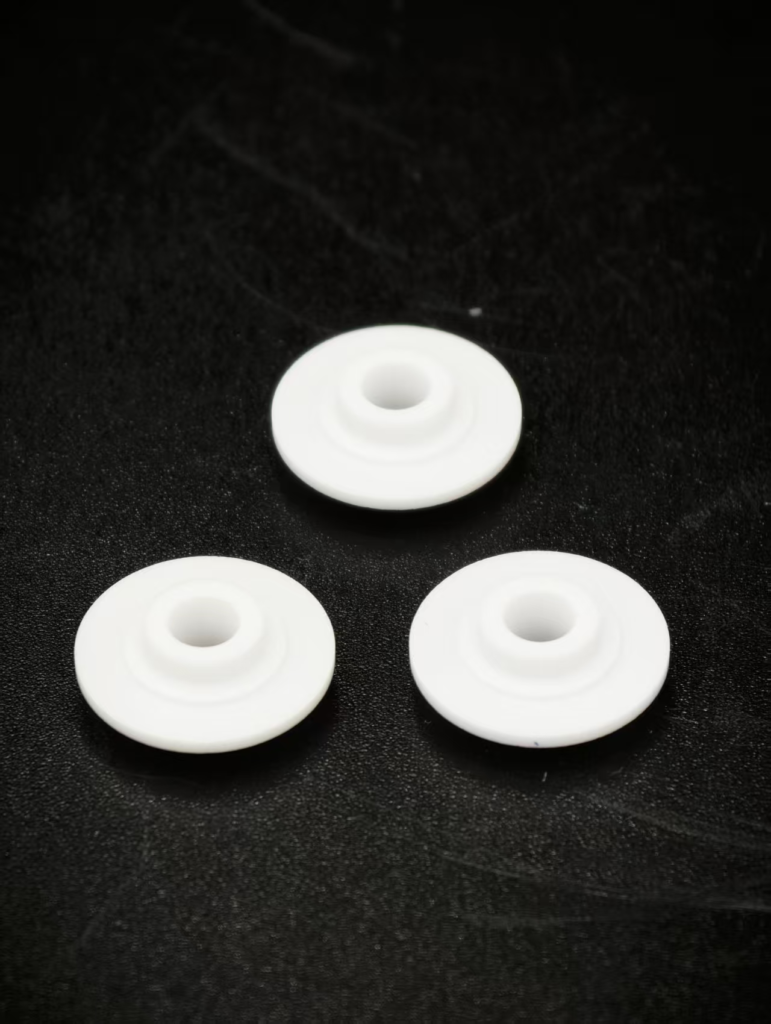
The Microscopic Physical and Chemical Essence
The extraordinary performance of high purity alumina originates directly from its microscopic crystal structure. We engineer these advanced ceramics to maintain a near-perfect α-Al2O3 crystalline phase. Therefore, the exceptionally strong ionic and covalent bonds lock the aluminum and oxygen atoms tightly together.
Furthermore, 99.9% alumina ceramic contains virtually zero glassy phase at the grain boundaries. In contrast, standard 95% industrial alumina relies heavily on silica-based sintering aids. Consequently, those lower ceramic grades suffer from rapid grain boundary corrosion when exposed to aggressive acids or semiconductor plasmas.
Moreover, this absence of glass phases directly prevents high-temperature structural creep. Engineers confidently deploy semiconductor grade alumina components in 1600°C environments without risking mechanical deformation. Additionally, the tight atomic packing creates extreme wear resistant ceramics that slice through abrasive slurries effortlessly.
Core Material Parameters and Engineering Benchmarks
Next, we must quantify these microscopic advantages with objective engineering data. Design engineers require exact performance metrics to justify replacing legacy components with high purity Al2O3. Therefore, we compiled the critical material parameters in the comprehensive reference table below.
Specifically, observe how high purity alumina dramatically outperforms 316L stainless steel in both hardness and maximum operating temperature. Furthermore, it offers superior dielectric insulation properties compared to electrically conductive Silicon Carbide (SiC). Consequently, you can make an informed material selection based on concrete operating data.
Cutting-Edge Industrial Applications and Practical Cases
Currently, equipment OEMs integrate high purity alumina into critical systems where traditional materials fail quickly. Specifically, three demanding industries rely exclusively on these advanced structural ceramics. First, we examine the semiconductor fabrication sector.
Semiconductor CVD/Etch Chamber Components: Semiconductor fabrication demands absolute purity to prevent costly wafer contamination. Halogen plasmas rapidly destroy standard quartz and metal chamber parts. Consequently, foundries utilize semiconductor grade alumina components for focus rings and showerheads to resist plasma etching and eliminate particle generation.
High-Pressure Metering Pump Plungers: Second, industrial fluid control systems constantly pump abrasive and highly corrosive chemical slurries. Standard 316L stainless steel plungers score and leak rapidly under these harsh conditions. Therefore, upgrading to extreme wear resistant ceramics extends pump life by a factor of ten, which saves massive maintenance costs.
Laser and Medical Analytical Instrumentation: Third, high-power lasers and medical blood analyzers require absolute electrical isolation and chemical neutrality. Thus, designers specify dielectric strength alumina for insulation tubes and fluid manifolds. Ultimately, this material guarantees accurate instrument readings and effectively prevents high-voltage arcing.
Precision Machining, Sintering Tolerance Control, and DFM
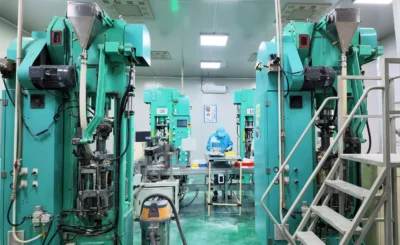
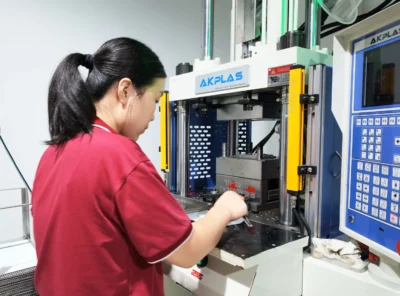
Designing the physical part represents only half of the complex engineering challenge. Manufacturers must also control the highly volatile fabrication process of high purity Al2O3. Initially, we shape the green ceramic bodies using precision Ceramic Injection Molding (CIM) or cold isostatic pressing.
Subsequently, the green parts undergo high-temperature sintering, where they experience a massive 15% to 20% volumetric shrinkage. Controlling this extreme shrinkage requires master-level thermal profiling. Therefore, we execute strict DFM (Design for Manufacturing) reviews to prevent unwanted warping and internal micro-cracking.
Finally, we achieve exact dimensional tolerances through rigorous post-sintering diamond grinding. Our CNC technicians routinely hold aggressive tolerances of ±0.002 mm on critical component diameters. Moreover, specialized diamond lapping produces mirror finishes reaching Ra ≤ 0.05 µm, which perfectly seals dynamic pump applications.
Frequently Asked Engineering Questions (FAQ)
Q: What is the main structural difference between 95% alumina and high purity alumina (99.8%+)? A: Specifically, 95% alumina contains up to 5% silica and glassy binders, which drastically lowers its chemical corrosion resistance. Conversely, 99.9% alumina ceramic eliminates these weak boundaries, providing superior plasma resistance and greater mechanical strength.
Q: Can you CNC machine high purity Al2O3 after the sintering process? A: Yes, but we must use specialized diamond grinding wheels because the ceramic reaches a Vickers Hardness of 1600. Consequently, post-machining takes considerable time, so we highly recommend optimizing your CAD drawings for near-net-shape sintering.
Q: Is high purity alumina suitable for rapid thermal cycling environments? A: Generally, alumina exhibits moderate thermal shock resistance. Therefore, if your application involves extreme temperature spikes (like rapid quenching), we might evaluate Silicon Nitride instead. However, for steady high-temperature holding, alumina performs flawlessly.
Q: How do I attach semiconductor grade alumina components to metal flanges? A: Typically, engineers use active metal brazing, mechanical clamping with O-rings, or high-temperature epoxy. Specifically, we can metallize the ceramic surface to allow direct soldering to Kovar or stainless steel hardware.
Conclusion and Factory Engineering Consultation
Ultimately, specifying high purity alumina requires balancing extreme industrial performance against increased machining complexity. This advanced material completely resolves dielectric breakdowns, chemical corrosion, and abrasive wear. Therefore, it delivers an unparalleled ROI (Return on Investment) for critical OEM equipment.
We actively help hardware engineering teams transition seamlessly from failing metals to extreme wear resistant ceramics. Furthermore, our dedicated engineering team provides rapid DFM feedback on your custom geometries. Consequently, we identify potential manufacturing risks before you spend money on tooling.
Stop replacing worn-out machine components every single month. Please submit your RFQ alongside your 2D/3D CAD drawings (STEP, IGS, or PDF formats) to our engineering department today. Subsequently, we will evaluate your technical project and dispatch custom prototypes for your immediate field testing.
