

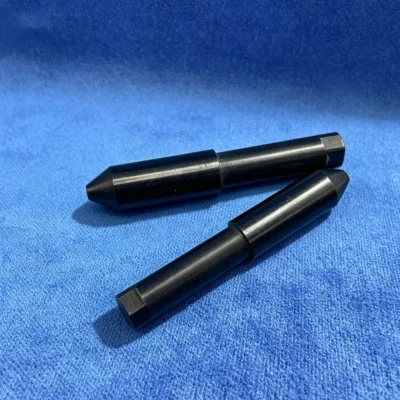


Gas Pressure Sintered Silicon Nitride (GPSN): High-Toughness Net-Shape Engineering Ceramics for Severe Mechanical, Thermal, and Corrosive Service
Gas Pressure Sintered Silicon Nitride (GPSN) represents the premier technical solution for high-volume structural applications requiring both extreme mechanical toughness and complex geometric flexibility. Fabricated under elevated nitrogen overpressure (typically 2 to 10 MPa) at sintering temperatures between 1,750°C and 1,850°C, this process suppresses the thermal decomposition of silicon nitride into gaseous silicon and nitrogen. Consequently, it allows complete liquid-phase sintering of intricate, three-dimensional preforms into near-theoretical density (>99.2%) without the geometric constraints of uniaxial hot pressing. The process facilitates anisotropic in-situ grain growth, producing an elongated, interlocking β-Si₃N₄ crystalline framework. This microstructure delivers high fracture toughness (KIC ≥ 7.5 MPa·m¹/²), reliable strength retention above 1,000°C, and exceptional wear longevity in severe operational conditions.
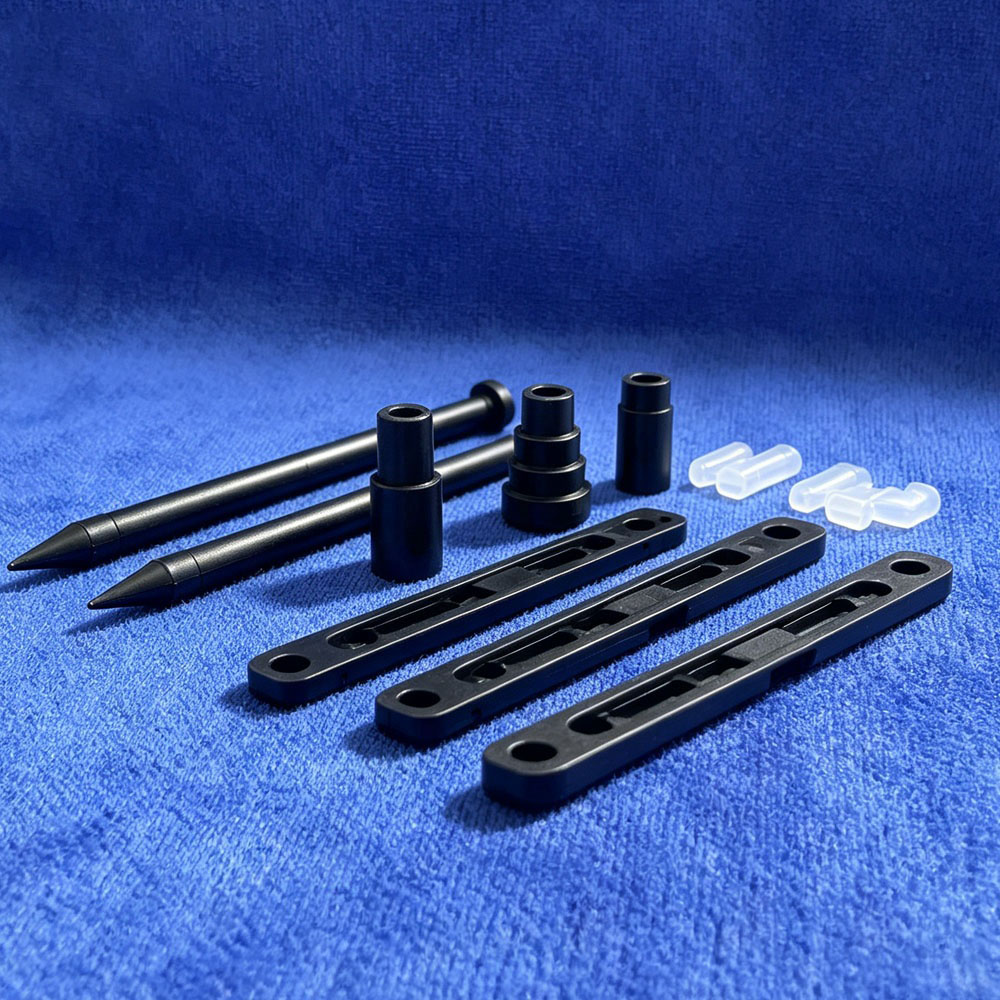
Key Technical Advantages & Core Engineering Value
- Self-Reinforced Microstructure & High Fracture Toughness: In-situ growth of rod-like β-Si₃N₄ grains creates an interlocking matrix that deflects propagating microcracks, delivering fracture toughness of 7.0–8.5 MPa·m¹/² and flexural strength up to 1,000 MPa.
- Complex Net-Shape Capability with Low Porosity: High-pressure nitrogen sintering eliminates pore coalescence without rigid mechanical dies, enabling the mass production of intricate geometries (threaded nozzles, vanes, and impellers) with residual porosity under 0.5%.
- Superior Thermal Shock & High-Temperature Stability: A low thermal expansion coefficient (3.0–3.2 × 10⁻⁶/K) combined with elevated thermal conductivity (>30 W/(m·K)) enables rapid water-quench thermal shock endurance (ΔT > 750°C) and continuous duty up to 1,200°C in air.
- Tribological Longevity & Dry Running Resistance: Boasting a Vickers hardness of HV10 1,500–1,700 and low sliding friction against bearing steels, GPSN prevents galling, micro-welding, and premature surface pitting under boundary or starved lubrication.
- Corrosion Resistance & Dielectric Isolation: Completely inert to non-ferrous molten alloys (Al, Zn, Mg) and strong industrial acids, while maintaining an electrical volume resistivity exceeding 10¹⁴ Ω·cm to arrest stray electrical currents.
Quantitative Material Specification Sheet
| Physical / Mechanical Property | Test Standard | Unit | Typical Value (GPSN) |
|---|---|---|---|
| Chemical Matrix | XRF / Chemical Analysis | — | β-Si₃N₄ + Multi-component Rare Earth Aids |
| Bulk Density | ASTM C373 / ISO 18754 | g/cm³ | 3.22 – 3.25 |
| Open Porosity | Archimedes Method | % | < 0.5 (Fully Closed Pore State) |
| Flexural Strength (25°C) | ASTM C1161 (4-Point) | MPa | 850 – 1,000 |
| Flexural Strength (1,000°C) | High-Temp 4-Point | MPa | 600 – 700 |
| Fracture Toughness (K₁_C_) | ASTM C1421 / SEPB | MPa·m¹/² | 7.0 – 8.5 |
| Elastic Modulus (Young’s) | ASTM C1259 | GPa | 300 – 320 |
| Vickers Hardness (HV10) | ASTM C1327 | GPa / HV | 15.0 – 17.0 (1,500 – 1,700 HV) |
| Thermal Conductivity (25°C) | ASTM E1461 (Laser Flash) | W/(m·K) | 30 – 35 (Substrate Grades: 60–90) |
| Thermal Expansion (20–1,000°C) | Dilatometry | 10⁻⁶/K | 3.0 – 3.2 |
| Thermal Shock Resistance (ΔT) | Water Quench Method | °C | 750 – 850 |
| Max Operating Temp (Air) | Continuous Exposure | °C | 1,200 |
| Volume Resistivity (25°C) | ASTM D257 | Ω·cm | > 10¹⁴ |
| Dielectric Breakdown Strength | IEC 60243 | kV/mm | 15 – 18 |
Mission-Critical Applications & Industry Use-Cases
1. Precision Bearing & Drive Systems (EV Traction Motors, Wind Turbines, Machine Spindles)
Components: Cylindrical rollers, spherical balls, and sliding bushes. Technical Value: Over 55% weight reduction versus steel minimizes centrifugal skidding at ultra-high pitch-line velocities. High fracture toughness prevents catastrophic spalling under cyclic contact stresses, while volume resistivity stops electric discharge pitting in high-voltage variable-frequency inverter assemblies.
2. Advanced Automotive & Heavy-Duty Powertrain Systems
Components: Turbocharger turbine rotors, cam followers, valve lifters, and glow plug heater elements. Technical Value: Low rotational inertia enables rapid boost response in turbo assemblies. Elevated high-temperature fatigue strength handles transient thermal spikes and combustion-gas soot abrasion without thermal crack propagation.
3. Industrial Welding, Metal Forming, & Foundry Processing
Components: High-frequency tube welding guide rollers, TIG/MIG gas nozzles, extrusion sizing dies, and molten metal riser tubes. Technical Value: Extreme thermal shock resistance allows direct immersion into molten non-ferrous metals without cracking. The non-stick surface prevents spatter adhesion in robotic welding lines, significantly reducing tooling downtime.
4. Semiconductor, Chemical, & Oil & Gas Fluid Handling
Components: Mechanical face seal rings, sand-slurry valve trims, subsea choke plungers, and plasma etch confinement rings. Technical Value: Highly resistant to cavitation, abrasive particulate erosion, and acidic slurries. Outperforms tungsten carbide and alumina in multi-phase fluid control systems exposed to high differential pressures.
Engineering Support & Request a Quote
Scale Your High-Stress Ceramic Production with Verified GPSN Engineering: Avoid the geometric limitations of uniaxial pressing and the brittle failures of conventional alumina. Our materials engineering team provides comprehensive design-for-manufacturing (DFM) reviews, CIP/dry-pressing optimization, and CNC diamond grinding down to ±0.002 mm for production batches and mission-critical prototypes.
