
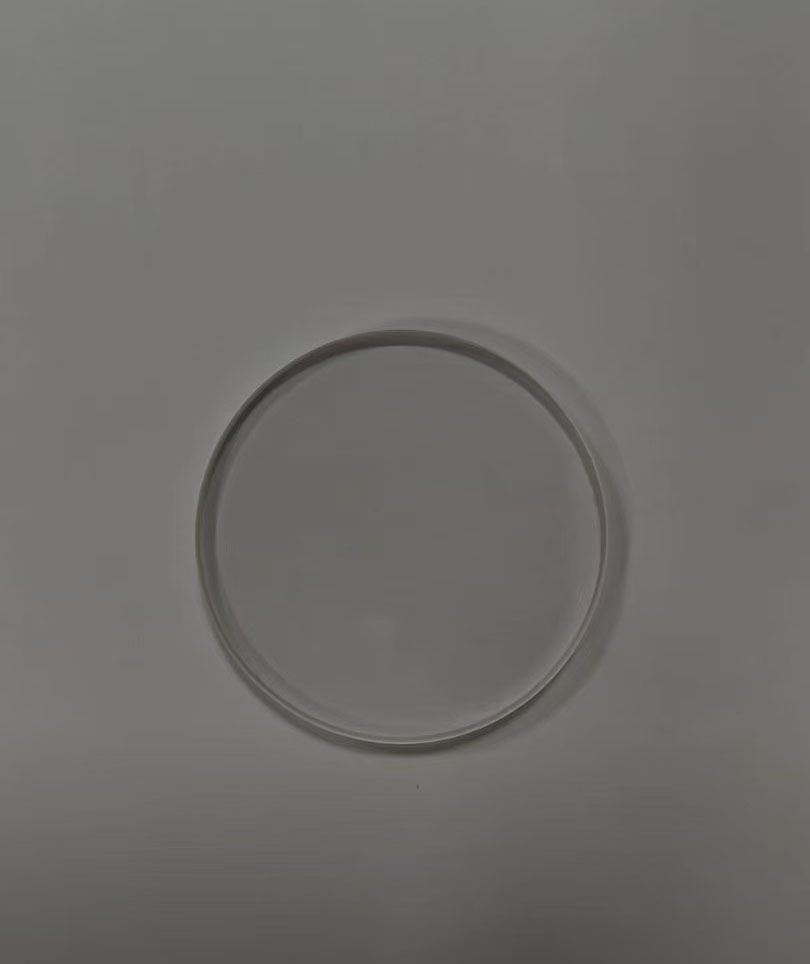
For hardware R&D teams and mechanical engineers, designing viewports, sensor windows, and sight glasses for aggressive environments typically forces a compromise between optical transmission and structural integrity. Traditional fused quartz and borosilicate glass provide excellent clarity but fail catastrophically under extreme mechanical stress, high-pressure fluid dynamics, or halogen plasma exposure.
Transparent alumina (often referred to as Polycrystalline Alumina or PCA) bridges this engineering gap. By achieving near-theoretical density and eliminating light-scattering porosity, it delivers the extreme mechanical toughness and chemical inertness of advanced structural ceramics alongside broad-band optical transmittance.
The Material Physics: How Alumina Becomes Transparent
Standard high-purity alumina is opaque white due to microscopic pores and grain boundaries that scatter light. Transparent alumina is engineered through a combination of ultra-high purity powder (typically >99.9%), precise magnesium oxide (MgO) doping to inhibit grain growth, and Hot Isostatic Pressing (HIP) or high-temperature vacuum sintering. This process eliminates internal voids, resulting in a fully dense microstructure that allows light to pass through.
Key baseline specifications include:
-
Broad Optical Transmission: High transmittance across the visible and infrared (IR) spectrums, typically from 0.3 μm to 5.5 μm.
-
Mechanical Rigidity: A Vickers hardness (Hv) exceeding 18 GPa, making it highly resistant to abrasive wear and scratching—vastly outperforming standard glass.
-
Thermal Shock Resistance: Withstands rapid thermal cycling and continuous operating temperatures up to 1600°C (2912°F) without structural degradation.
-
Absolute Chemical Inertness: Unaffected by boiling acids, concentrated alkalis, and aggressive plasma, with zero outgassing in ultra-high vacuum (UHV) chambers.
Critical OEM Application Scenarios
1. Semiconductor Fabrication: Plasma-Resistant Viewports
In sub-nanometer node semiconductor manufacturing, standard quartz viewports and sensor windows are rapidly etched by the fluorine or chlorine plasmas used in CVD and dry etching chambers.
-
Zero Particulate Shedding: Transparent alumina resists halogen plasma attack, preventing the shedding of silicate particulates that contaminate silicon wafers.
-
UHV Integrity: Its zero-porosity structure makes it the ideal material for high-vacuum viewports, allowing optical monitoring of the wafer without risking chamber pressure loss or metal ion contamination.
2. Severe-Service Fluid Control: Sight Glasses and Flow Monitors
For fluid machinery OEMs serving the petrochemical, aerospace, and chemical processing sectors, monitoring fluid dynamics under extreme pressure is a constant challenge.
-
High-Pressure Reactors: Transparent alumina sight glasses can withstand extreme hydrostatic pressures that would shatter conventional glass.
-
Corrosive Slurry Monitoring: Its extreme hardness ensures the window remains optically clear and un-scratched even when exposed to high-velocity abrasive slurries and highly caustic chemicals.
3. Optoelectronics and Analytical Instrumentation
Hardware that relies on infrared sensors, lasers, or high-intensity lamps requires optical windows that do not degrade under thermal or optical stress.
-
IR Domes and Sensor Windows: Used in defense, aerospace, and industrial LiDAR systems, transparent alumina provides excellent IR transmission while acting as a ballistic and environmental shield.
-
High-Pressure Sodium Lamps: Originally developed for lighting, the material’s ability to contain high-temperature, highly reactive sodium gas makes it a proven solution for extreme analytical environments.
Precision Polishing and OEM Sourcing
Producing structural components from transparent alumina requires advanced post-sintering machining. To achieve optical clarity, the ceramic must undergo rigorous double-sided diamond lapping and polishing to reach surface roughness (Ra) values below 0.01 μm, alongside strict flatness and parallelism tolerances.
When specifying optical ceramics for your next hardware design, standard manufacturing will not suffice. Partner with an advanced technical ceramics manufacturer like Arte to ensure your transparent alumina components are engineered for absolute optical precision and mechanical reliability in the field.