
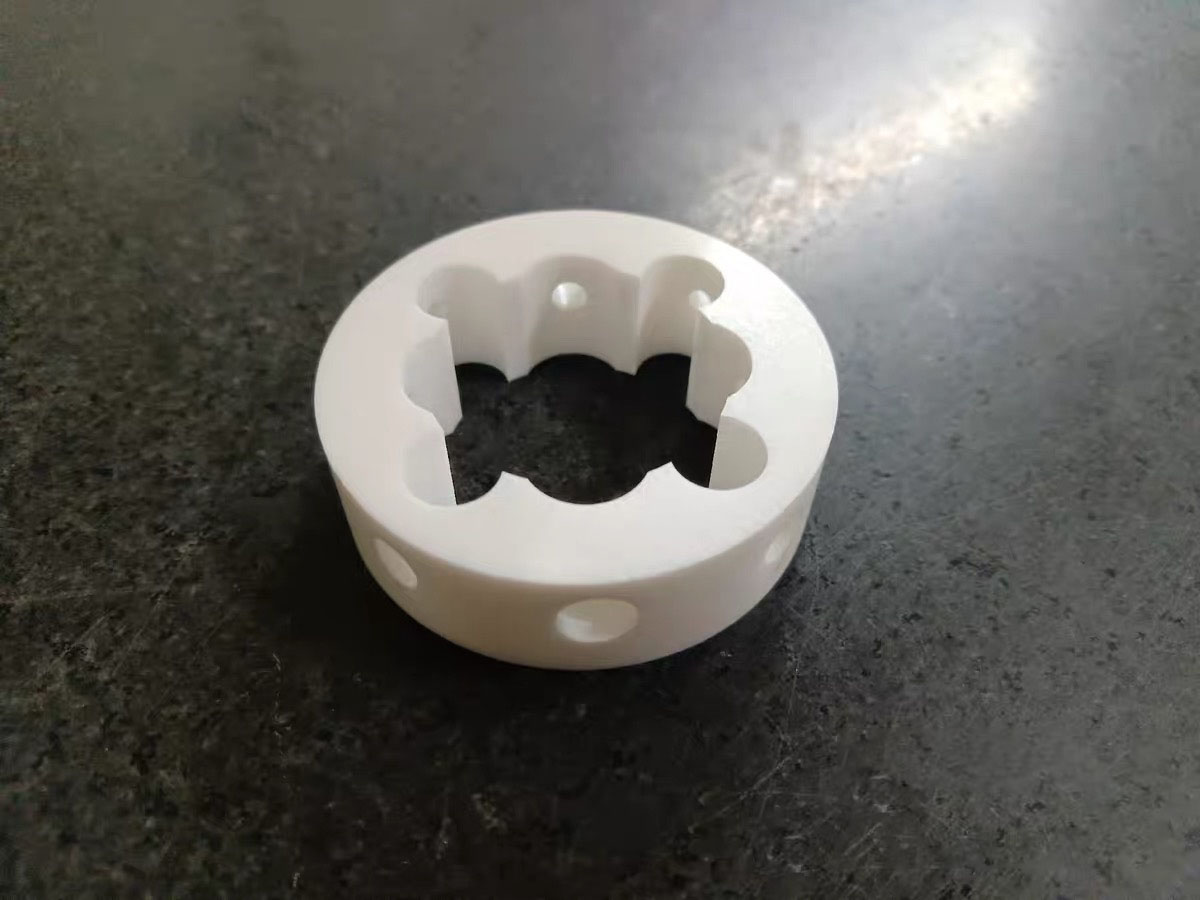
In the hierarchy of advanced structural ceramics, purity directly dictates the ceiling of mechanical, thermal, and electrical performance. While 95% to 99.5% alumina grades satisfy a vast majority of industrial requirements, 99.8% Alumina (Al2O3) represents the pinnacle of commercially viable high-purity aluminum oxide.
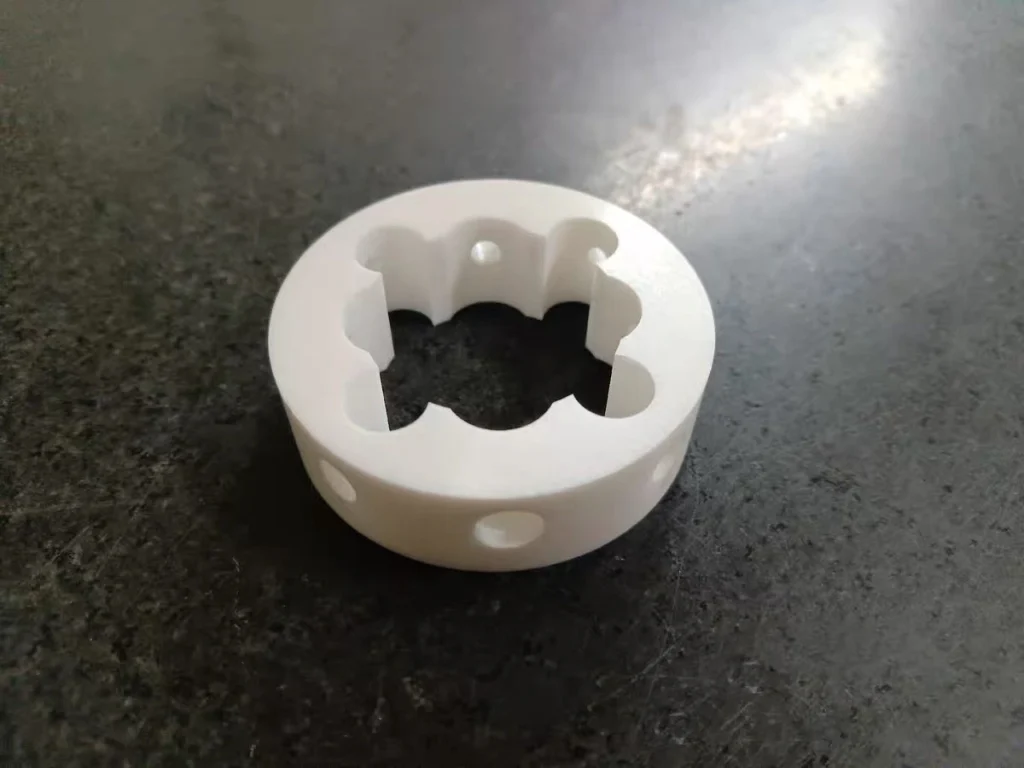
For hardware R&D teams, semiconductor fab engineers, and fluid control OEMs, moving to 99.8% purity is a calculated engineering decision. By reducing the silica and alkaline earth glass phases to near-zero levels (<0.2%), this ultra-pure grade eliminates the microstructural vulnerabilities that cause component degradation in ultra-high vacuum (UHV), corrosive, and high-plasma environments.
The Engineering Data: What Sets 99.8% Al2O3 Apart?
The performance leap from 99.5% to 99.8% is defined by its crystalline density and the absolute absence of grain boundary impurities. Key baseline specifications include:
- Maximum Hardness and Wear Resistance: Achieving a Vickers hardness (Hv) exceeding 16.5 GPa, delivering exceptional tribological performance in severe-service mechanical seals and bearing surfaces.
- Absolute Chemical Inertness: Unaffected by boiling hydrofluoric acid (HF), harsh halogen plasmas, and highly concentrated alkalis. There is no glassy binder phase left to be etched or leached.
- Ultra-High Dielectric Strength: Superior electrical insulation capabilities (>15 kV/mm) combined with extremely low dielectric loss tangents, critical for high-frequency RF transmission.
- Zero Outgassing: Fully dense, zero-porosity microstructure ensures complete vacuum integrity in UHV chambers.
Critical Application Scenarios
1. Advanced Semiconductor Manufacturing (Sub-5nm Nodes)
In modern front-end semiconductor fabrication, contamination tolerances are measured in parts per trillion (ppt). 99.8% alumina is exclusively specified to prevent metal ion contamination and particulate shedding.
- Plasma Etch and Deposition (CVD/PVD): Gas distribution showerheads, focus rings, and dielectric windows made of 99.8% alumina resist aggressive fluorine-based plasmas. The lack of silica prevents the formation of volatile byproducts that contaminate silicon wafers.
- Ion Implantation: High-voltage insulators and arc chambers utilize the material’s immense dielectric breakdown strength and thermal stability to operate reliably under extreme ionic bombardment.
2. Analytical and Medical Instrumentation
High-end diagnostic hardware relies on components that do not interfere with magnetic fields, high voltages, or sensitive chemical samples.
- Mass Spectrometry: Quadrupole insulators, UHV feedthroughs, and detector housings utilize 99.8% alumina for its zero-outgassing properties and dimensional stability under vacuum.
- Blood Analyzers and Dosing Systems: The material’s absolute chemical purity and biocompatibility make it ideal for micro-fluidic valves and precision dosing plungers, preventing any chemical leaching into biological samples.
3. Aerospace and Directed Energy Systems
When components are subjected to rapid thermal shock, mechanical vibration, and electromagnetic radiation, standard materials fail catastrophically.
- RF and Microwave Radomes: The incredibly low dielectric loss of 99.8% Al2O3 ensures maximum signal transmission for aerospace radar and targeting systems while providing a physical barrier against high-velocity atmospheric friction.
- Laser Systems: Internal structural components in high-power solid-state and gas lasers leverage the ceramic’s thermal conductivity (~35-38 W/m·K) and optical-grade lapping capabilities.
OEM Sourcing and Precision Tolerances
Specifying 99.8% alumina requires rigorous manufacturing controls. The extreme hardness of the material means that post-sintering forming is entirely dependent on advanced diamond grinding, CNC lapping, and polishing.
To achieve the Ra 0.05 μm surface finishes and sub-micron concentricity tolerances required by fluid pump and semiconductor OEMs, the raw powder must be consolidated using Cold Isostatic Pressing (CIP) followed by high-temperature vacuum sintering. When finalizing your Bill of Materials (BOM), partner with an established technical ceramics manufacturer like Arte to ensure your 99.8% alumina components are engineered for absolute precision and long-term reliability.