
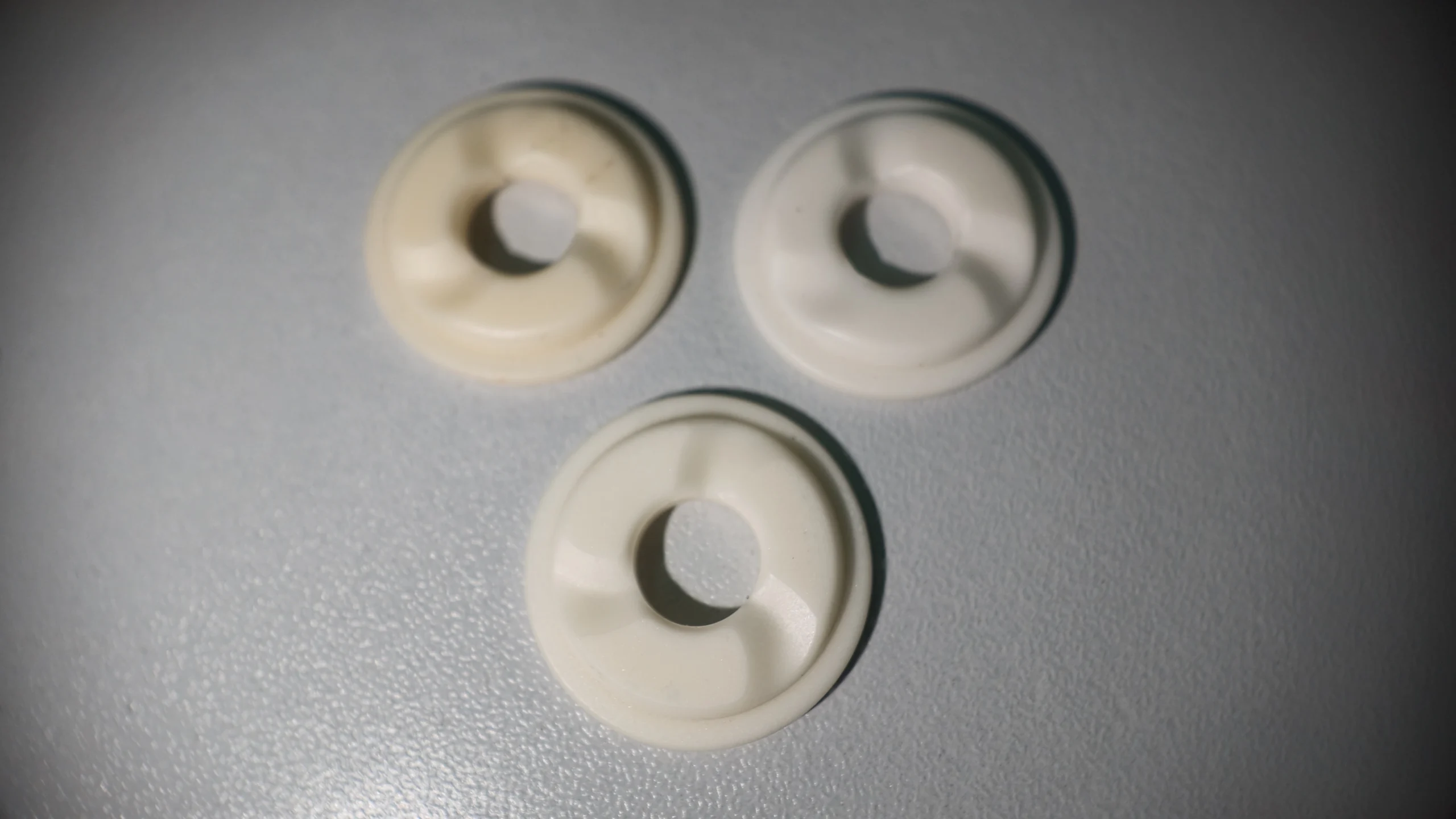
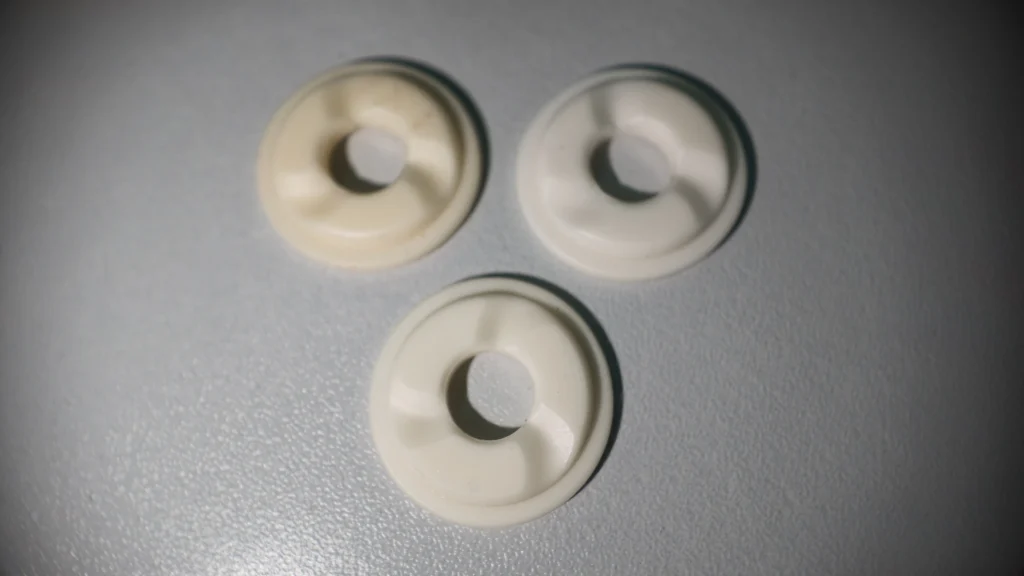
When specifying structural ceramics for severe-service environments, the purity level dictates the upper limits of performance. While 95% and 99% alumina cover a broad spectrum of industrial needs, 99.5% Alumina (Al2O3) sits in a distinct class. By virtually eliminating the silica and alkaline earth glass phases, this ultra-high-purity ceramic delivers exponential gains in mechanical strength, chemical inertness, and thermal stability.
For hardware R&D teams and mechanical engineers, upgrading to 99.5% alumina is not just about material substitution; it is about extending the Mean Time Between Failures (MTBF) in critical semiconductor, fluid handling, and instrumentation systems.
The Microstructural Advantage: 99.5% vs. Standard Alumina
The transition from 99% to 99.5% purity fundamentally changes the material’s grain boundary physics. The near-absence of a glassy binder phase results in a denser, highly crystalline structure that offers:
-
Extreme Hardness: Achieving a Vickers hardness (Hv) of 16 GPa or higher, providing unmatched resistance to abrasive wear.
-
Zero Porosity: Fully dense microstructure that prevents gas permeation and eliminates microscopic trap points for contaminants.
-
Superior Corrosion Resistance: Complete inertness against highly aggressive acids (e.g., Hydrofluoric acid) and alkaline solutions, even at boiling temperatures.
-
Enhanced Thermal Conductivity: Approximately 35 W/m·K, allowing for better heat dissipation in high-power or high-friction applications.
Core Industrial Applications of 99.5% Alumina
1. Semiconductor Fabrication (Front-End Processing)
In sub-nanometer node semiconductor manufacturing, even trace metal ion contamination can destroy wafer yields. 99.5% alumina is a foundational material for OEM fab equipment due to its plasma resistance and ultra-clean properties.
-
Plasma Etch and CVD Chambers: Used for focus rings, gas showerheads, and dielectric windows. The 99.5% purity prevents the shedding of silicate particles when exposed to aggressive fluorine or chlorine plasmas.
-
Wafer Handling Systems: Precision-ground robotic end effectors and vacuum chucks leverage the material’s high stiffness-to-weight ratio to move silicon wafers rapidly without deflection or particulate generation.
2. Severe-Service Fluid Control and Pumps
For fluid machinery OEMs serving the petrochemical, aerospace, and pharmaceutical sectors, catastrophic seal failure is unacceptable. The hardness and lapping characteristics of 99.5% alumina make it the ultimate choice for tribological applications.
-
Ultra-Precision Plungers: Used in high-pressure metering and dosing pumps. The material can be ground and polished to a surface finish of Ra 0.05 μm, drastically reducing friction against polymer seals and extending operational life.
-
Mechanical Seal Faces: In centrifugal pumps handling abrasive slurries, 99.5% alumina seal rings maintain optical flatness under extreme pressure and thermal shock, ensuring zero leakage.
-
Corrosive Valve Components: Seats, balls, and flow control disks remain dimensionally stable and chemically unaffected when regulating aggressive industrial solvents.
3. Medical Instrumentation and Analytical Hardware
The exceptional dielectric strength and biocompatibility of high-purity alumina are critical for precise diagnostic equipment.
-
Mass Spectrometry Insulators: High-voltage standoffs and feedthroughs that require absolute electrical insulation and zero outgassing in ultra-high vacuum (UHV) environments.
-
Laser Tubes: Gas and solid-state laser internal components that demand rigorous dimensional stability under rapid thermal cycling and intense optical radiation.
Precision Machining for OEM Tolerances
The physical hardness of 99.5% alumina necessitates specialized manufacturing protocols. After forming via Cold Isostatic Pressing (CIP) and high-temperature sintering, achieving OEM-grade geometric tolerances requires advanced diamond grinding and 5-axis CNC machining. This ensures that complex geometries, concentricity, and flatness requirements drop perfectly into your final assembly without secondary modifications.
When specifying 99.5% alumina for your next hardware design, partner with a technical ceramics manufacturer capable of providing full traceability, tight-tolerance diamond lapping, and customized structural engineering support.